LDCD(Linear Dynamic Current Drive)
LDCD(Linear Dynamic Current Drive) is an exclusive current-drive technology developed by Eleven Audio. Unlike traditional power supply designs that primarily focus on voltage characteristics, LDCD focuses on optimizing current output and transient response, thereby greatly optimizing the dynamic internal impendance performance of the power supply.
The purpose of optimizing current drive capability is to reduce the internal impendance of the power supply, especially the dynamic internal impendance.
The reason internal impedance is used instead of internal resistance is because it typically exhibits extremely strong nonlinear characteristics.
Ohm's Law: Resistance = Voltage / Current
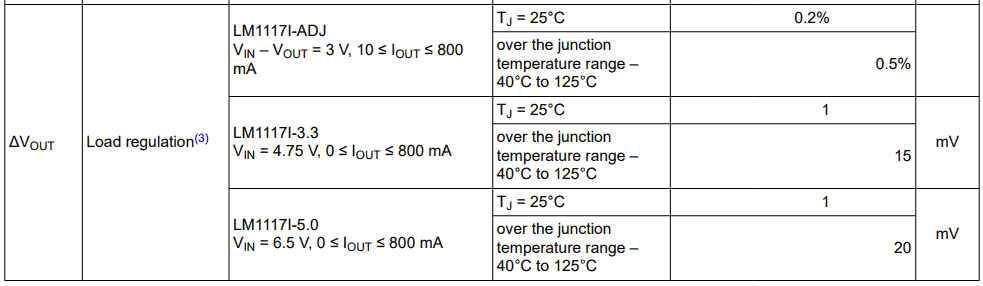
Let's take the classic Ti LM1117-5V LDO as an example.On page 5 of the datasheet, we can see Load Regulation: 20mV @ 0-800mA.
Therefore, we can calculate that
The output resistance = 20mV / 800mA = 25mΩ.
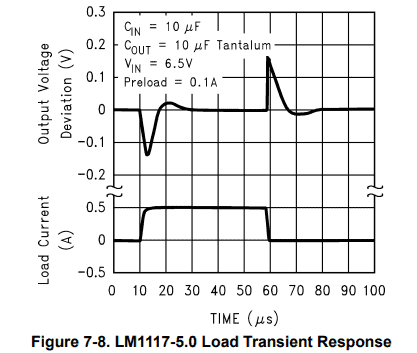
However, when we continue to page 7, Figure 7-8 reveals the truth.
From this figure, we can see several key points:
Current change: 0.5A
Peak voltage: approximately 0.15V
Time period: 100μS
Therefore, we can calculate:
At a frequency of 10kHz, Output impedance = 0.15V/0.5A = 300mΩ
The dynamic impedance is more than 12 times greater. That's equivalent to 21.6dB!
In other words, the dynamic performance is 21.6dB lower than the static performance.
Figure 7-8 illustrates the dynamic performance, so its title is Load Transient Response, not Load Regulation.
LDCD (Linear Dynamic Current Drive) technology originates from high-performance audio amplifiers.
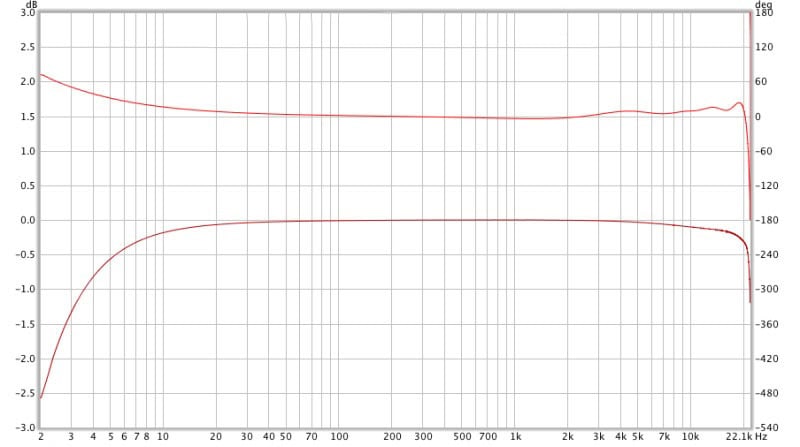
Audio amplifier circuitry is highly mature, achieving near-perfect frequency/phase response and extremely powerful current drive capabilities, capable of driving loads as low as 1 ohm with currents exceeding 10A, and boasting bandwidths of 100kHz or even higher. However, the architecture of an audio amplifier is designed to drive a combination of low-resistivity and inductive loads, while a power supply needs to drive almost purely capacitive loads. These two circuit structures are completely incompatible.
The diagram below illustrates the performance of an audio amplifier for illustrative purposes only and does not represent an actual product.
How does LDCD technology work?
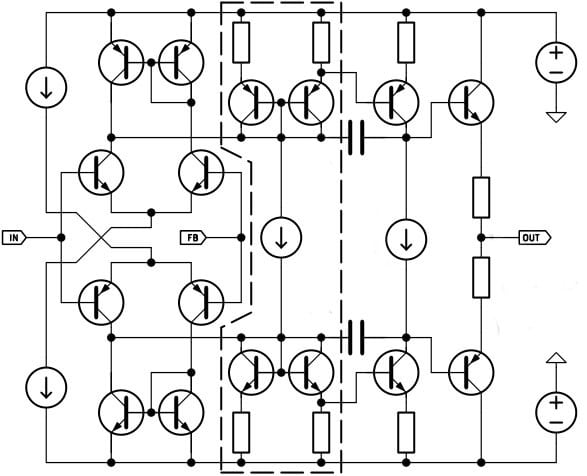
Benefiting from Mr. Michael Xiao's expertise in automatic control, we developed our exclusive LDCD (Linear Dynamic Current Drive) technology. This redesigned circuit topology successfully integrates the performance of an audio amplifier into the power supply, achieving excellent system stability and easily driving capacitive loads. Unlike traditional designs that rely heavily on feedback correction, LDCD employs a high-speed linear current control architecture.
This results in a significant optimization of the power supply's dynamic output impedance (internal impedance), achieving over 100 times the actual performance improvement compared to traditional power supplies in the most auditory-sensitive frequencies and dynamic range.
LDCD, with its innovative circuit architecture, fundamentally enhances the dynamic performance of power supplies, significantly improving sound quality for both analog and digital audio devices.
The diagram below is for illustrative purposes only and does not represent a specific product.